
5 March 2026
BMT launches ROC-Sim, a scalable high fidelity virtual test environment and training solution enabling development, testing and assurance of uncrewed and autonomous systems. A low cost, low risk solution to accelerate the safe introduction of uncrewed systems and meet the training needs of the maritime workforce today and into the future. ROC-Sim will be unveiled on Tuesday 10 March, Day 1 of Oceanology International, with an official launch event at 11:30 on the National Centre for Marine Autonomy (NCMA) stand.
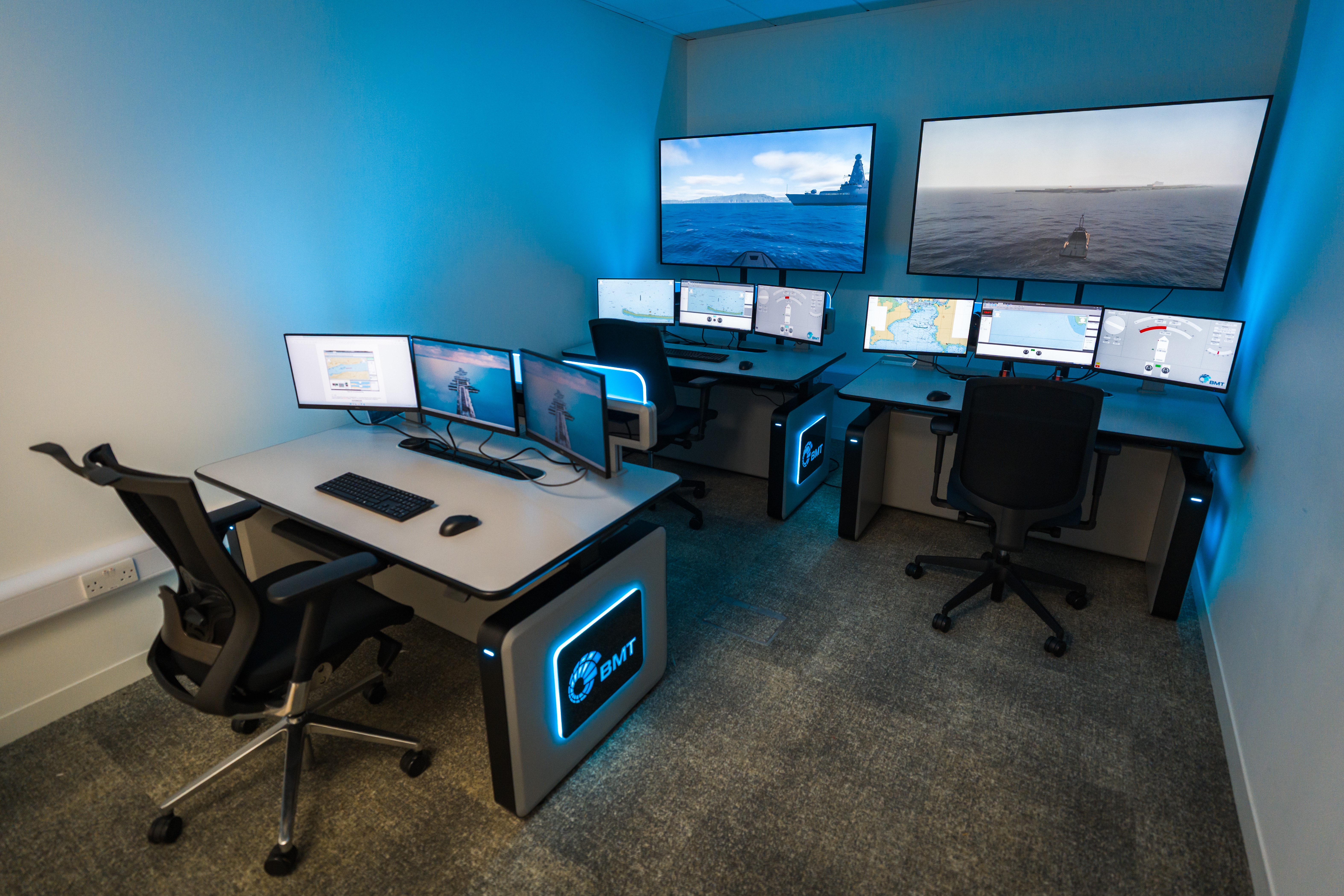
ROC-Sim is a deployable Remote Operations Centre Simulator that can be integrated into any remote operating centre or networked within a federated simulation environment to enable uncrewed vessel operator training. The system is underpinned by BMT’s high fidelity REMBRANDT simulator and integrated within BMT’s Digital Innovation and Simulation Centre (DISC) at Fareham to provide a networked multi vessel virtual test environment enabling development, testing and assurance of maritime autonomous systems. The capability enables operator training in a virtual environment that precisely replicates the vessel’s handling characteristics, before transitioning to live control. It represents a leap forward in the use of simulation to develop specialist digital tools for training, trials and evaluation of remotely operated uncrewed systems, supervised autonomy and human-autonomy teaming in the maritime domain.
ROC-Sim enables users to assess concepts of operation, autonomous functions, command and control interfaces, operating procedures, workload and high risk edge cases within realistic and hydrodynamically representative operational scenarios. It forms a key part of BMT’s broader digital autonomy assurance ecosystem, working alongside Synthetic Environment Assurance Services (SEAS) and BMT REMBRANDT to generate traceable evidence for safe and assured autonomy deployment.
“Maritime autonomy is advancing quickly, but confidence only comes when decisions are tested as they will be made, not as we hope they will perform,” said Jesse Loynes, BMT Maritime Autonomous Systems Consultant. “ROC-Sim gives organisations a way to interrogate assumptions, validate operations and build trust across the entire autonomy lifecycle. We’re excited to share this capability at Oceanology International and demonstrate how it strengthens real-world assurance.”
The widespread adoption of uncrewed and remotely operated vessels in the maritime domain demands new approaches to testing, training and mission planning to ensure safe and effective operation. By replicating real-world scenarios in a controlled environment the ROC-Sim enables operators to build critical decision-making skills, adapt to dynamic, multi-vessel scenarios and gain familiarity with emerging technologies and mission profiles. The open architecture system provides a ‘train as you operate’ facility compatible with any uncrewed surface vessel (USV) or third-party command and control system. The simulation facilitates iterative testing of operational concepts, allowing stakeholders to evaluate human-machine teaming strategies, communication protocols and workload distribution across hybrid fleets.
“ROC-Sim addresses some of the critical challenges faced with the introduction of maritime autonomy and marks significant progress towards safe and sustainable uncrewed operations. As the transition to maritime autonomous and uncrewed systems accelerates organisations face increasing pressure to demonstrate regulatory compliance, robust training and human-machine integration. ROC-Sim has been developed to help operators, regulators and equipment manufacturers build trust in autonomy by testing systems in a cost effective, realistic, repeatable synthetic environment. It demonstrates the adaptability and versatility of BMT’s REMBRANDT high-fidelity synthetic environment and how simulation has a vital role in the development, testing and safe operation of uncrewed systems”.
Will Alexander, Head of Maritime Autonomous Systems at BMT.
The ROC+DOCK collaboration with South Devon College and HydroSurv last year provides an example of how simulation has enhanced situational awareness, reduced training time, assured real-world operational success and informed design decisions. Ultimately, the ROC-Sim emerges as a vital enabler for the safe transition to an increasingly uncrewed and autonomous maritime world.
BMT will also highlight its strengthened autonomy consultancy offering, supporting customers from early stage concept development through independent Verification &Validation, operator readiness and regulatory engagement. By working closely with industry, operators and regulators, BMT is helping accelerate the safe introduction of maritime autonomous systems and shape the future of maritime autonomy.
BMT’s active membership in the National Centre for Marine Autonomy (NCMA) underpins this launch. The company is proud to be associated with the NCMA and its ambitious vision for the future of marine autonomy and will stand alongside NCMA at Oceanology to show its full support for this national effort.
Attend the official ROC-Sim Launch Event at 11:30 on Tuesday 10 March, Day 1 of Oceanology International, on the NCMA Stand (Q400), ExCcel London. BMT is also a sponsor for the official launch of the Plymouth-based National Centre for Marine Autonomy, which is taking place at Oceanology International.

23 February 2026
New Fareham facility strengthens UK defence innovation by de-risking next generation naval platforms, hybrid and uncrewed fleets and the safe integration of AI and human autonomy teaming into the Royal Navy’s increasingly digital battlespace.

7 November 2025
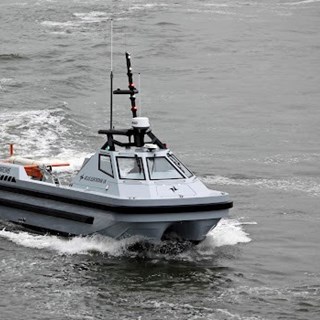
BMT, in collaboration with Hydrosurv and South Devon College, is proud to unveil the latest milestone in maritime autonomy: the ROC + DOCK project.
1 April 2025
We have successfully partnered with ATLAS ELEKTRONIK UK (AEUK) to advance autonomous maritime navigation by utilising our proprietary Synthetic Environment Assurance Service (SEAS) testbed. This collaboration rigorously assessed AEUK’s cutting-edge autonomous navigation system, ARCIMS, delivering critical insights into its decision-making capabilities and compliance with the International Regulations for Preventing Collisions at Sea (COLREGs).
8 July 2024
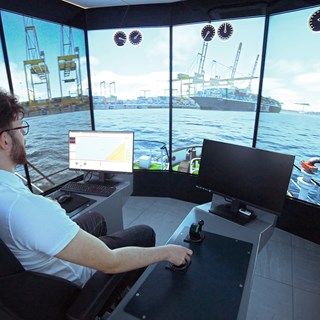
BMT is collaborating on a decarbonisation project for the UK's maritime sector. In partnership with South Devon College and HydroSurv, BMT aims to drive clean and sustainable maritime innovation in the UK’s Southwest and beyond.