
8 September 2026
Most organisations know they need to transform. Fewer can explain, with confidence, why their current change efforts are stuck, slowing, or simply failing to deliver what was promised. Leaders often face a familiar dilemma: the organisation is already mid‑race, running at full speed, yet something in the system is dragging performance down. Teams are working hard. Plans are in place. New initiatives launch regularly. But progress feels uneven, the causes of friction are unclear, and no one has the time to stop and take stock.
This paper addresses that reality. We introduce a practical way to diagnose transformation maturity while the organisation is still in motion. The Strategy Canvas helps leaders make sense of what is really happening across the whole organisational system—quickly, clearly, and without adding bureaucracy. It turns complexity into decisions.
You will learn a fast, evidence‑based approach to:
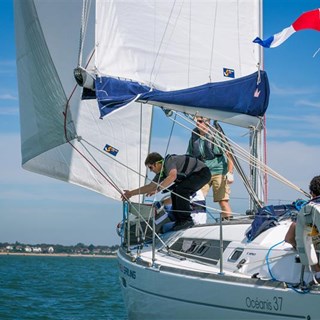
In a recent Insights Paper, we revealed the details of our in-house strategy canvas where we set out our approach to seeing the whole picture of complex organisational change without being limited by a linear, step-by-step checklist. We explained the purpose and use of the strategy canvas using the metaphor of a yacht race. The organisation that is being transformed is the yacht, and the crew and shoreside team are the stakeholders and employees.
Diagnosing change mid‑flight is like boarding a yacht halfway through a race. You cannot stop the boat. You must understand what is happening at pace and act without slowing the crew. The Strategy Canvas is your aide‑mémoire: it ensures you have considered the whole environment, not just the most visible wave.
The Canvas concentrates attention on five environments. Each environment poses a high‑level diagnostic question and points to a small set of practical checks. The value lies in how these environments interact in your context.
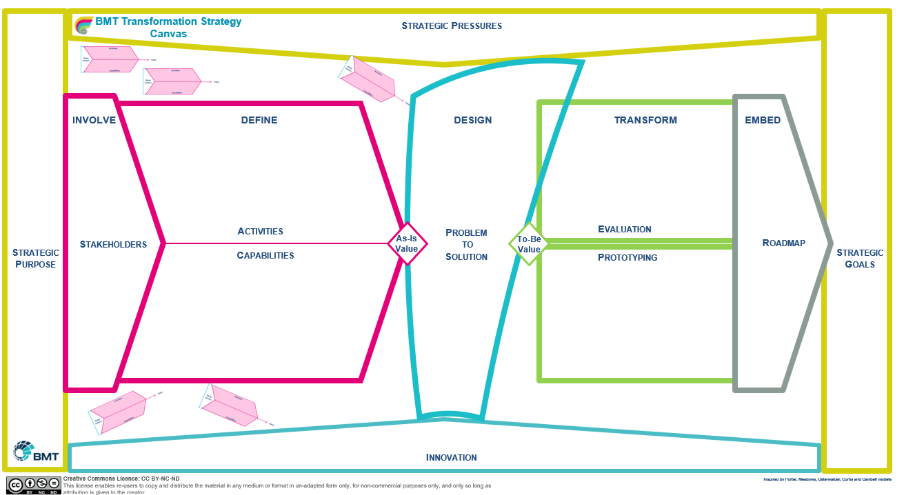
The Five Environments of the Strategy Canvas
Diagnostic Question:
How clearly does the organisation understand and respond to its external environment and strategic drivers?
Use in practice: Keep strategy alive in daily activity. Constantly track external changes, competitor moves and technology shifts. Guard against mission drift as stakeholder expectations change.
Insight: Organisations rarely fail at having a strategy; they fail at synchronising it with reality.
How the Canvas helps
Whilst an organisation is designing and implementing a change programme, the outside world is dynamically and unpredictably changing. If the change team’s approach is too static, the new operating model won't be fit for the new environment by the time it is implemented. The ability of the organisation to be aware of what is on the technology horizons, and what other similar and/or competing organisations are doing is vital to ensure that the future business and operating models are fit for purpose. In order our yacht race metaphor, understanding what other racing yachts are doing, as the wind and tides shift is essential, but the goal to reach the finishing point is paramount. Just tackling the wind and tides and responding to what competing boats are doing may lead to arriving at the wrong destination.
The diagnostic surfaces gaps in stakeholder alignment and agility, providing a clear basis for targeted improvement and a shared understanding of what “good” looks like in a complex, multi player environment. The balance between responding to external pressures and shifting stakeholder expectations can mean the organisation loses sight of its mission and goals, and therefore purpose.
Case: Strategic Review of Maritime Security
BMT’s independent review of the UK maritime security infrastructure provided a textbook example of diagnosing strategic maturity. BMT’s review identified that strategic direction was hampered by fragmented governance, unclear accountability, and ad hoc funding. Satisfying multiple stakeholder agenda could lead to mission drift. Critically, the review highlighted the need for a more deliberate, evidence-based approach to horizon scanning, stakeholder engagement, and strategic prioritisation, precisely the areas targeted by the Strategy Canvas’s strategic environment diagnostic.
Diagnostic Question:
How well does the organisation understand and manage its current business, operating and capability models and value delivery?
Use in practice: Make the relationships between business model, operating model and capability model explicit. Look for mismatches and handoff friction that slow delivery or degrade outcomes
Insight: Flow beats local efficiency. Siloed optimisation often hides system‑wide waste.
How the Canvas helps
Rapidly understanding the relationship between the business model and operating model is crucial. The business model is like the pre-planned route the yacht skipper creates for each race and the choice of vessel entering the race, whereas the operating and capability models interact to deliver the right equipment on board, used by the right people accurately to deliver a fast-moving yacht heading in the right direction. Identifying mismatches and dysfunctions between these elements is a crucial part of the diagnostic. If the organisation doesn’t have a means to constantly assess the match between capability and operating model the skipper’s choice of boat and route will be useless.
Case: Department for Work and Pensions (DWP)
BMT’s work with DWP’s Change and Resilience Group involved outcome-based planning, tools, and templates to standardise and improve operational processes across multiple programmes. The diagnostic focus on operational maturity—clarity of process, data-driven management, and continuous improvement, was central to the project’s success. These improved the fit between the capabilities of the DWP and the value creation processes.
Diagnostic Question:
How effectively does the organisation identify, design, and test solutions to its challenges?
Use in practice: Treat everyday workarounds and local adaptations as data. Map what people actually do versus what the procedure says. Co‑design, prototype, and iterate with users
Insight: Shadow processes signal need for change, not defiance. Study them before you “fix” them.
How the Canvas helps
Innovation is often considered to be an external function, or predominantly related to technology and software, but employees are constantly adjusting their work tactics. When a colleague leaves the team, a policy is updated or a department gets restructured, the whole value creating ecosystem shifts to accommodate. This is organisational innovation and can have negative as well as positive implications. The rapid diagnostic in the solutions environment is focused on establishing the extent to which the organisation knows how these operational changes are affecting the operating model. As your sailing crew adjusts to a new team member, or if an important piece of equipment breaks, the skipper has to change their plans. Crucially, the skipper needs to know that adjustments have been made. A organisation that doesn’t have a means of identifying and mapping what employees are actually doing, against the planned procedure, will be changing the wrong things.
Case: London Borough of Waltham Forest – Flood Risk Assessment
BMT’s flood risk assessment for Waltham Forest combined technical modelling with business case development and stakeholder engagement. The project exemplified high maturity in solution design: co-designing interventions, prototyping, and iterating with feedback from council teams and local stakeholders.
Diagnostic Question:
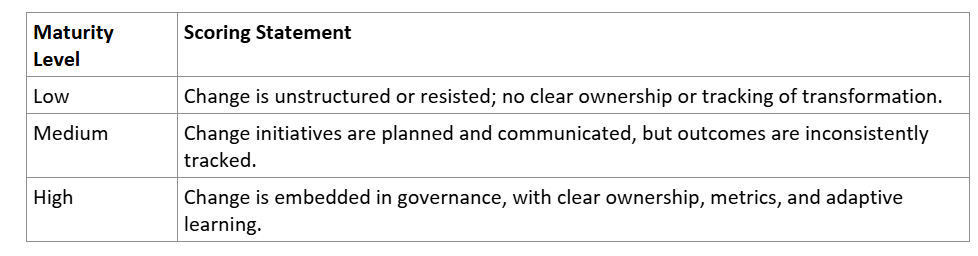
How well does the organisation manage change and transformation initiatives?
Use in practice: Go beyond awareness, training and ‘marketing the change’. Prototype end‑to‑end routines with ground floor staff before go‑live. Bake change into governance with clear ownership, metrics and learning loops.
Insight: If change is everyone’s job, it is often no one’s job. Make ownership explicit
How the Canvas helps
Successful transformation goes beyond departmental restructures or implementing new software. A highly effective sailing team practices with new equipment and new routines to the point that the innovation becomes instinct, before implementation. Awareness programmes and online training programmes are just the start. Practicing the new routines, and how they interact with other workflows from end to end is vital before go live, so if the diagnosis doesn’t show a plan for prototyping and practicing before go-live, you know that an organisational ‘slushy’ will result, as the organisation unfreezes (to borrow from Lewin) but falls apart before it can refreeze.
Case: National Security & Policing Organisation
BMT’s support for a national security and policing organisation included developing governance, reporting, and benefits management structures for transformation initiatives as well as a deep review of its approach to stakeholder engagement. The focus on embedding change management into governance and tracking outcomes aligns directly with the BST Strategy Canvas’s diagnostic for change maturity.
Diagnostic Question:
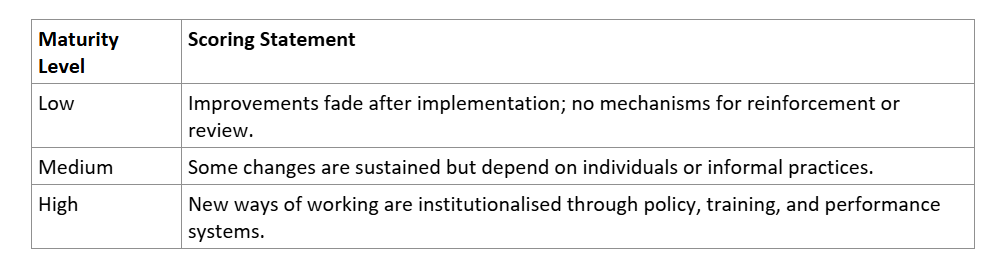
How effective is the planning to embed and sustain change into business-as-usual?
Use in practice: Translate roadmaps into step‑by‑step plans that can flex as conditions change. Protect agility by freeing resource for the next change package, rather than over‑optimising a single function.
Insight: Embedding is not a ceremony at the end; it is the design constraint from the start.
How the Canvas helps
An implementation roadmap is an important high level communication tool, but translating that to a step-by-step plan, that accounts for strategic shifts and changes along the way is a significant diagnostic step. Whilst the skipper is responding to high level changes in wind and tides, and to how other yachts are responding, the course that was first plotted before the race started will be constantly changing. The diagnostic focuses on whether the organisation is sensitive to this constant adjustment, and freeing up resource to support the next change package, or degrading the agility of the organisation by focusing on the efficiency of one department to the detriment of others.
Case: Royal Navy – Flood Risk and Training Transformation
BMT’s training support for the Royal Navy’s Mine Hunting Capability project institutionalised new ways of working through policy, training, and performance systems. This is a strong example of embedding change into business-as-usual.
How the Diagnostic Approach Works in Practice
In our sailing metaphor, the yacht is already in the middle of the race when the diagnostic begins. Everyone is already focused on doing their best to win the race, they are already operating at the highest levels of efficiency and effectiveness. The diagnosis, and any subsequent changes, has to happen in and around the operating organisation. Whilst further efficiencies can always be found, the strategy canvas diagnostic focuses on the mismatch between the five environments, identifying where the organisation’s blind spots might be.
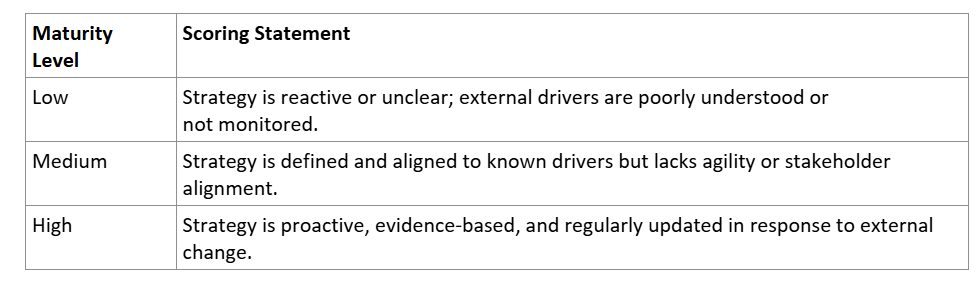
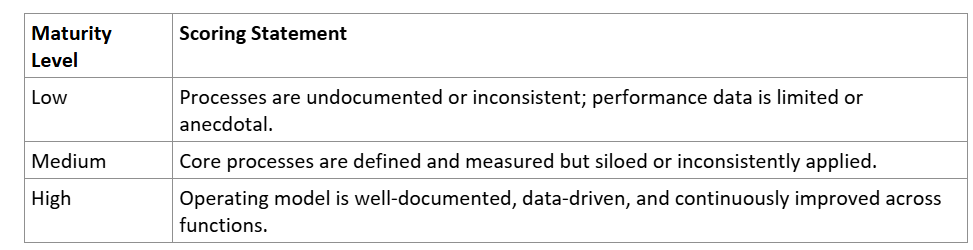
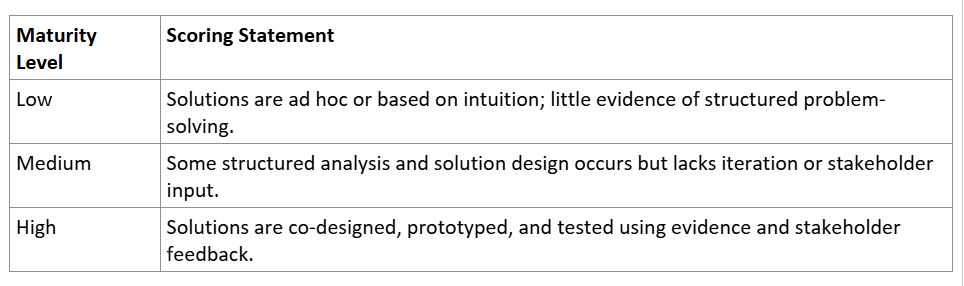
Establishing the Current State: The change team uses the Canvas to frame discovery interviews, workshops, and document reviews. For each environment, targeted questions and maturity-level scoring statements help the team and client quickly gauge where the organisation stands.
Identifying and Prioritising Gaps: By comparing the customer’s current state to best practice, the Canvas surfaces not just the existence of gaps, but their significance and impact on the organisation’s ability to achieve its goals. This enables the team to focus on what matters most.
Understanding the Importance of Gaps: The Canvas links each gap to the organisation’s strategic objectives and the practical realities of change. This ensures that the team and client understand which weaknesses are most likely to undermine transformation success.
Establishing a Menu of Activities: Once the current state and priority gaps are clear, the Canvas enables the change team to recommend a tailored set of activities, workshops, process redesign, governance changes, training, or stakeholder engagement, matched to the client’s specific needs and maturity level.
Supporting Sustainable Change: Finally, the Canvas ensures that recommendations are not just about quick wins but about embedding new ways of working into business-as-usual.
Conclusion
Organisational transformation is not a single event, but a series of races, each with its own challenges and rewards. By using this diagnostic frame, leaders and change teams can ensure they are steering in the right direction, building the capabilities needed to navigate whatever waters lie ahead, and embedding change that endures beyond the finish line.
The diagnostic serves to:
This diagnostic approach moves the conversation from abstract ambition to practical, targeted action, maximising the value of consulting interventions and increasing the likelihood of successful, lasting transformation.
Here’s our high-level diagnostic. How healthy is your transformation initiative?
Strategic Environment
Diagnostic Question: How clearly does the organisation understand and respond to its external environment and strategic drivers?
Operational Environment
Diagnostic Question: How well does the organisation understand and manage its current operating model and value delivery?
Solutions Environment
Diagnostic Question: How effectively does the organisation identify, design, and test solutions to its challenges?
Change Environment
Diagnostic Question: How well does the organisation manage change and transformation initiatives?
Embed Environment
Diagnostic Question: How effective is the planning to embed and sustain change into business-as-usual?

Tim Curtis is a Fellow of the Systems & Complexity in Organisation professional body and has been actively involved improving awareness in systems thinking for 30 years across consulting and as an academic. He has worked extensively across government, charities and the private sector including defence, central government and policing, ports, energy and wastes management to improve safety, security and sustainability.

In a world where complexity is the norm and certainty is rare, adaptability isn’t a luxury, it’s a necessity. And when we combine it with empathy, structure, and a commitment to quality, we create programmes that deliver real, lasting value.
Tim Curtis
Most transformation programmes fail—not because of poor execution, but because they never truly understood the race they were competing in. The BMT Strategy Canvas changes that.
Kathryn Walker
Coaching is a proven tool to support change leaders and their teams. The greatest impact and success has been achieved in transformation programmes, where structural and programmatic approaches are supported by attention to the cultural and behavioural aspects of change.
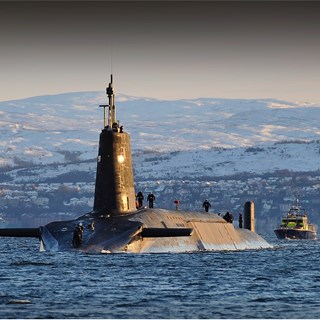
Imagine gaining more space, deeper dives, faster refits, and safer missions—all by moving one critical system outside the pressure hull. Discover how pressure-tolerant lithium-sulphur batteries are transforming submarine design, and why this breakthrough isn’t just theoretical—it’s ready for deployment. Whether you're upgrading or designing new, this is capability you can deliver today.