
Built on research. Proven in testing. Applied in the field.
Engineering confidence for complex pipeline integrity decisions
Engineering confidence for complex pipeline integrity decisions
For decades, pipeline operators have relied on BMT to help evaluate, manage, and mitigate threats to critical energy infrastructure. Our team combines practical engineering experience with advanced analysis, testing, and research to support informed decisions across the asset lifecycle—from integrity management and mechanical damage assessment to CO₂ transportation, fracture control, geohazards, welding engineering, and emerging energy infrastructure.
Through our leadership in industry research programs and technical committees, we don't just apply industry standards—we help develop them.
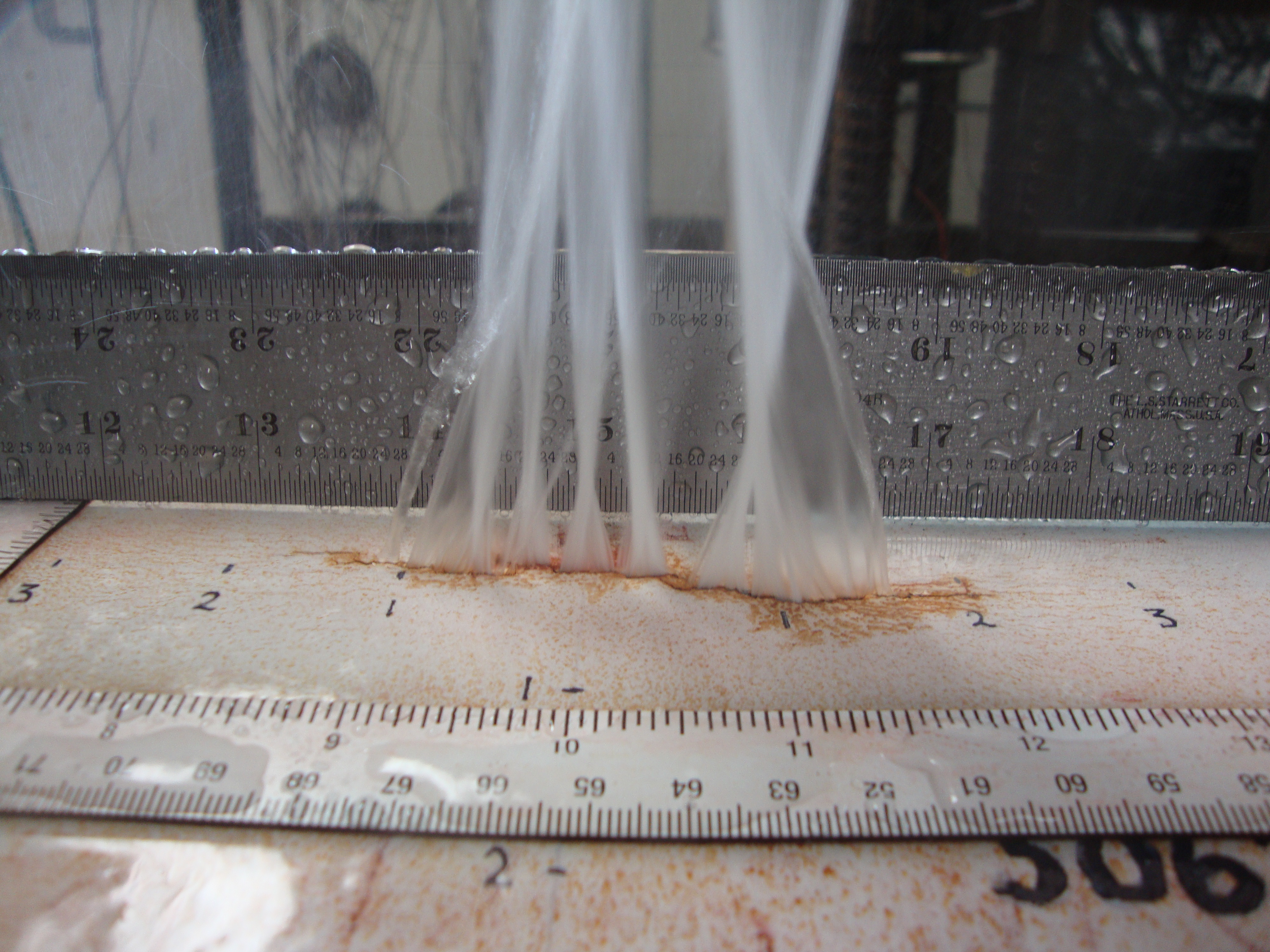
Assessing and managing dents, deformations, cracking, and interacting threats using industry-leading analytical methods, finite element analysis, and advanced integrity assessment tools.
Supporting the safe transportation of CO₂ and hydrogen through advanced engineering assessments, fracture control studies, dispersion modeling, welding qualification, material performance validations, and infrastructure readiness evaluations.
Identifying and managing hydrotechnical and geotechnical threats through advanced engineering analysis, monitoring solutions, instrumentation, GIS integration, and risk evaluation.

Providing expertise in welding procedure development, in-service welding, repair engineering, and welding integrity programs.
Supporting engineering decisions through laboratory testing, material characterization, hydrogen charging studies, fracture assessments, fitness-for-service assessments, full-scale pressure cycling testing programs, and research-driven qualification testing.

Leading and supporting advanced research programs through PRCI, PHMSA, JIPs, and industry partnerships to solve tomorrow's challenges before they become operational risks.
At IPCE 2026, our team will present nine technical papers addressing some of the industry's most pressing integrity and infrastructure challenges.
Tuesday, September 22 | 3:30pm
Session: 06-06 Hydrotechnical Part 2
When river-crossing pipelines are exposed by scour, they are subjected to hydrodynamic forces that threaten their integrity. While standard industry tools such as River-X assess these risks assuming the pipe is a smooth cylinder, they fail to account for the hydrodynamic modifications introduced by the discrete concrete weights found on real-world assets. This oversight can lead to errors in predicting pipeline vibrational response thus, its remaining life and failure. This paper presents a numerical Fluid Structure Interaction (FSI) study that moves beyond these simple approximations, providing operators with a realistic method and correction strategies to assess how concrete weights impact the safety and stability of their exposed pipelines in a water crossing.
The methodology utilizes a coupled Unsteady Reynolds Averaged Navier Stokes (URANS) CFD solver and a linear finite element structural solver to analyze the response of pipelines with Short river weights (SR). The study investigates two primary non-dimensional configurations: Closely Spaced (SRCS) and Widely Spaced (SRWS) weights. Results indicate that the presence of segmented weights fundamentally disrupts the classic von Kármán (v-K) vortex street observed in plain cylinders. Specifically, for the SRCS configuration, the wake is dominated by complex edge and streamwise vortices rather than coherent spanwise shedding. This disruption leads to a delay in the initiation of VIV, with vibration onset occurring at higher reduced velocities (VR > 2) compared to the standard plain pipe initiation at VR ~1.
Furthermore, the study reveals critical instability modes absent in standard screening tools that are caused by the disruption of coherent and spanwise symmetry of v-K vortices. While widely spaced weights (SRWS) exhibit behavior analogous to plain cylinders, including characteristic "figure 8" trajectories and lock-in regimes, closely spaced weights (SRCS) demonstrate a susceptibility to galloping-like excitations at high Reynolds numbers. In these high-reduced velocity regimes, the pipeline exhibits unstable, monotonically growing crossflow amplitudes exceeding 1D, potential leading to ultra-low cycle fatigue (or, ultimate failure), contradicting the self-limiting nature typically associated with VIV which generally leads to high and low-cycle fatigue. This paper maps these response regimes for a limited set of pipe attributes and concrete weight geometries, providing a methodology that can be applied to larger pipe size ranges and concrete weight dimensions. The results provide a nuanced understanding of how geometrical discontinuities in the buoyancy control weights disrupt or enhance vortex shedding, necessitating a departure from plain-pipe assumptions in free span analysis. It also recommends potential corrections strategies to existing models incorporated in screening tools such as River-X (or DNV RP F105) to incorporate the effects of short discrete concrete weights.
Presenting Author: Saurav Pathak, MSc., PEng.
Tuesday, September 22 | 4pm
Session: 06-06 Hydrotechnical Part 2
Pipeline watercourse crossings are susceptible to vortex induced vibrations (VIV) driven by riverbed scour, bank erosion, and unsteady flood currents, with potentially severe implications for structural integrity and fatigue life. Conventional VIV assessment procedures typically rely on fully submerged, single phase flow assumptions and linear structural models, and therefore do not capture spatially varying water depth, free surface interaction, or stage dependent hydrodynamics that govern response in shallow rivers.
This paper introduces a fully coupled fluid–structure interaction (FSI) framework in LSDYNA (ICFD) for shallow/deep river crossings with discrete concrete weight coating (CWC). The three dimensional, LES based free surface flow model resolves both classical VIV and free surface induced vibration (FSIV), capturing “on/off” resonance behaviour and the generation of surface gravity waves by pipeline motion. These mechanisms, which can significantly amplify vibration amplitudes and fatigue demand, cannot be represented by traditional fully submerged approaches.
The structural formulation explicitly incorporates the mechanical discontinuity of discrete CWC, including steel–concrete interface slip, nonlinear concrete stress–strain response, and damage/cracking under high curvature. Neglecting these mechanisms leads to overestimated effective stiffness, shifts in natural frequencies, and misprediction of stress/strain demand, all of which are critical for free span fatigue assessment. The FSI framework is validated against established experimental data for free surface flows and VIV response.
A case study is presented for a 26 in diameter pipeline river crossing with a 45 m free span subjected to a 2.2 m/s current. Sensitivity analyses are performed on submergence depth, gap to diameter ratio, CWC induced added mass and stiffness, and coating shear capacity, slip, and damage effects on vortex shedding characteristics and fatigue life. The results demonstrate that coating shear strength controls shear transfer and stress concentration factors, while submergence depth governs the strength of free surface interaction and FSIV severity. Explicitly modelling these coupled effects provides a more accurate and physically consistent basis for assessing the integrity of scoured watercourse crossings and for supporting design, stabilization, and maintenance decisions in shallow, flood prone waterways.
Presenting Author: Abdelfettah Fredj, PhD.
Wednesday, September 23 | 8:30am
Session: 05-07 Materials and Properties: CO2 Pipes and Fracture 2
The Battelle Two-Curve Method (BTCM) is the long-favoured design criterion for ensuring ductile fracture arrest in gas pipelines. However, the BTCM has been shown to produce increasingly non-conservative Charpy V-notch energy (CVN) requirements with modern high strength and high toughness steel grades, necessitating empirical correction factors. Application of the BTCM to dense phase carbon dioxide (CO2) pipelines has been met with similar inconsistencies thus resulting in the recent development of an empirical boundary model and empirical recalibrations of the BTCM. All recent advancements in fracture arrest methodologies still make use of the Charpy energy as the material toughness parameter due to the simplicity, accessibility, and historical significance. For many years the crack tip opening angle (CTOA) has been studied as a promising fracture parameter for measuring crack propagation resistance. A test to measure the CTOA using the drop-weight tear test (DWTT) has been published by the American Society for Testing and Materials as ASTM E3039. The combination of an accepted testing standard and recently proposed arrest methodology prompts further consideration for the CTOA.
In this paper, a state-of-the-art literature review of ductile fracture arrest is presented focusing on methods for CO2 pipelines, and future possibilities with the CTOA. A critical review of the recent CO2 full-scale burst tests is presented, and new insights discussed. A thorough review of literature related to recent studies on the effect of fracture velocity and loading mode on the CTOA will be presented. To address knowledge gaps, a material testing program was enacted to examine the CTOA as measured using ASTM E3039 which compared the measured CTOA from a specimen that was flattened to that of a specimen that was gull winged. The range of pipe diameters examined extended the range of previous work and demonstrated that flattening the specimen provided a slightly more conservative estimate of CTOA and reduced the scatter in the data.
Presenting Author: Chris Bassindale, PhD., PEng.
Wednesday, September 23 | 9:30am
Session: 09-01 Part IV Integrity management of CO2 pipelines
Accurate prediction of CO₂ dispersion in complex terrain remains a major gap in current pipeline safety standards. Closing this gap is critical because CO₂ is a colorless, odorless gas that is heavier than air under normal atmospheric conditions, enabling it to accumulate in low‑lying areas and create asphyxiation hazards. A comprehensive CFD‑based investigation of dispersion behaviour in varied topography and vegetated environments helps address this need.
Existing standards provide limited guidance for assessing dispersion in complex terrain, vegetated corridors, and areas with buildings or other structures. Detailed CFD modelling using species transport based on Fick’s law provides the level of resolution needed for accurate assessment in such settings.
A structured parametric analysis, including controlled blowdowns and full‑bore rupture scenarios, demonstrated how wind speed, terrain geometry, and the presence of buildings impact dispersion behaviour. Narrow cutlines bordered by tall trees were found to promote predominantly axial transport, while wider cutlines or areas with low shrubs enabled greater lateral spread. CO₂ was also observed to migrate along creeks and rivers, with increased tortuosity reducing downstream travel rates or increasing the time at which elevated CO2 concentrations occur downstream. Low‑wind conditions (<1 m/s) during blowdowns produced elevated ground‑level concentrations near the release point that are not reliably captured by integral models. Additionally, the presence of built structures along the path of the CO2 was found to change the local concentration levels. Similarly, dense phase CO2 blowdown had a greater consequence compared to gas phase blowdown.
Comparisons with commonly used integral tools, including ALOHA and PHAST, showed that these models may overestimate plume extents or underpredict hazard duration in complex settings. A detailed CFD reconstruction of the Satartia incident, incorporating terrain effects and findings from the failure investigation report, further validated the importance of advanced modelling approaches.
The dispersion characteristics identified in this work warrant special consideration in risk assessments and Emergency Response Plans (ERPs), particularly in areas influenced by dominant wind channels, low‑lying terrain, surrounding buildings or structures, and linear features such as cutlines, rivers, and creeks where CO₂ concentrations may change rapidly or dissipate slowly.
Presenting Author: Saurav Pathak, MSc., PEng.
Wednesday, September 23 | 9:30am
Session: 03-63-01 Technology AI and Big Data
Various regression-based analytical, screening (e.g., PRCI Level 0.75) and assessment (e.g., PRCI shape factor-based approach) approaches have been developed for fatigue life predictions of single peak dents under cyclic pressure loading. These approaches have been incorporated into the American Pipeline Institute (API) Recommended Practice (RP) 1183. These models were developed using regression analysis on a large finite element dent dataset. These models require a limited number of dent geometry parameters, extracted from the axial and transverse profiles through the dent apex. The number of input parameters were limited to reduce the complexity while maintaining good predictive performance.
The current paper discusses the results of a study undertaken to explore the advantages of employing full 3D dent shapes for dent fatigue life assessment compared to models using limited dent geometry parameters. A neural network (NN)-based machine learning model was trained on the full 3D dent geometry data from the large FE dent dataset to predict the maximum dent stress ranges. The dataset consisted of a wide range of pipe geometries (114.3 mm to 1066.8 mm pipe outer diameter), indenter shapes (spheroidal, spherical and cylindrical with diameters ranging from 101.6 mm to 1219.2 mm), indentation depths (0.5% to 10% of pipe outer diameter), indentation pressures (0% to 90% PSMYS) and cyclic pressure loadings (10% to 70% PSMYS pressure ranges, 15% to 75% PSMYS mean pressures). Both restrained and unrestrained dents were considered, with separate NN models developed for these.
The NN model predictions correlated very well with the FE data. When compared against the PRCI shape factor-based approach, the NN model correlated reasonably well, with approximately 95% of the shape factor-based predictions falling within 20% of the NN model's predictions. The NN model was also compared against the analytical screening approaches where the screening predictions were observed to be conservative compared to the NN model predictions.
Presenting Author: Arnav Rana, PhD.
Thursday, September 24 | 9am
Session: 05-09 Materials and Welding 2: Hydrogen and CO2
Engineering Critical Assessments (ECA) are a fracture mechanics-based methodology essential in the oil and gas industry to ensure the integrity of pipeline girth welds under demanding conditions, including high strain, low temperatures, and complex loading scenarios. As a result of the high Joule-Thompson coefficient and phase transition, there is a large temperature reduction experienced in a CO2 pipeline during decompression, especially in low-lying areas. The notion of these large contraction stresses gives rise to the concern of traditional girth weld toughness and flaw acceptance criteria.
In this paper, a benchtop study is performed to quantify the expected membrane stresses in an underground pipeline experiencing a temperature reduction and ultimately determine if the CSA Z662 ultrasonic workmanship criteria are out of touch with demands from CO2 service. A scenario of a girth weld in a horizontal directional drilled line was considered to determine the membrane stresses. The commercial finite element (FE) code ABAQUS 2024 was used to generate the soil-structure interaction models and solve the analyses. Utilizing the calculated stresses from the FE model, a comprehensive parametric study was conducted using ECA methodologies from API 579 for girth welds, with a focus on high-grade line pipe steels (X60 – X80) used in modern pipeline construction. The study evaluated the minimum required toughness to prevent rupture considering the influence of key parameters such as pipe grade, pipe geometry (diameter, thickness), weld defect size/location, residual stresses, and weld strength matching. The results of the analysis demonstrated that for most cases examined a crack tip opening displacement (CTOD) of 0.15 mm was sufficient to prevent fracture, there were several extreme cases in which higher CTODs, up to 0.39 mm, were required. The effect of weld strength matching was also shown to have a significant effect on required toughness and demonstrate the advantage of overmatching.
Presenting Author: Chris Bassindale, PhD., PEng.
Thursday, September 24 | 4:30pm
Session: 03-15 Corrosion Regulations
Threat categories are used to characterize a threat or damage to the asset, both from an integrity management perspective and for reporting following an incident. Historically, published threat categories have generally followed the most predominant damage mechanism or root cause that results in an incident or product release. These categories were then formulated based on the predominant historical cause for the incident, a lagging indicator, and therefore do not include consideration of other damage mechanisms that contributed to the incident, or threats that have yet to have occurred (leading indicator). A robust threat category system can be useful in guiding integrity management programs in understanding all potential threats and prompting consideration of creating layers of protection and mitigation against such threats.
This work presents an update to the PRCI threat categories, which have primarily been centered on onshore buried gas pipelines, was last updated in the 2000s. Since this time, there have been several fundamental advancements in understanding of various corrosion, cracking, and mechanical damages that are not appropriately captured in the older threat category definitions. These threat categories have also been leveraged across codes and standards, such as ASME B31.8S.
The update considered offshore pipelines, facilities, and liquid product types. The revised threat categories were based around a seven primary threat category and defined further by 53 secondary threat categories to provide additional fidelity. The threat categories are based on fundamental damage mechanisms or the system-wide impact of a particular threat. The revisions considered global standards and onshore and offshore operator experience to provide categories grounded in reality. A conceptual test is proposed to prompt integrity engineers to consider all potential threats, their likelihood of occurrence and potential mitigations, as part of a robust integrity management plan. This work can be used to enhance a pipeline or facility integrity management plan, and also provides a robust and consistent reporting format for incidents that will support continuous improvement of the integrity plan.
Presenting Author: Stuart Guest, PhD., PEng.
Friday, September 25 | 8:30am
Session: 05-10 Materials and Welding 3: Weldability and examination
In-service welding on operating pipelines presents unique challenges, particularly concerning the risk of hydrogen-induced cracking from hydrogen introduced by welding. The accumulation of hydrogen at susceptible sites such as imperfections, areas of high hardness, or stress concentrations, can lead to delayed cracking at ambient temperatures. Historically, the highest risk of hydrogen cracking has been associated with the heat-affected zone (HAZ) of ferritic steels, where rapid cooling from in-service welding can create microstructures susceptible to cracking. While the use of low-carbon micro-alloyed steels has mitigated some of this risk, and the now-standard usage of low hydrogen welding practices has further mitigated weld hydrogen cracking, the challenge still remains for in-service repairs using shielded metal arc welding (SMAW).
By delaying the inspection of a weld following the completion of the final weld pass, the delay time enables sufficient time for a weld to crack after which inspection may detect such a feature. This delay, which can range from hours to days, depends on various factors, including welding procedure parameters, materials, and environmental conditions. However, inspection delay time recommendations have generally not been appropriately updated in codes, recommended practices, or company standards.
Traditionally, the time-to-peak-hydrogen (TTPH) concentration has been used to determine the optimal delay time for NDE. However, a newer concept, time-to-critical-hydrogen (TTCH), considers the combined effects of hydrogen concentration, material susceptibility, and applied stress, providing a more comprehensive understanding of cracking risks. Modelling of hydrogen diffusion was completed for over 700 scenarios across various pipe, sleeve, and fillet weld geometries, including combinations of ambient temperatures, product temperatures, and welding scenarios for gas and liquid pipelines. Hydrogen modelling also considered the role of weld pass delay time (interpass time) and post-heating of the completed weld to encourage increased hydrogen diffusion rates and shorten the NDE delay time. This study reports TTPH and TTCH values and trends that can be used by pipeline operators to support determination of appropriate NDE delay times that can shorten the time before returning to normal operating conditions and recoating activities can begin.
Presenting Author: Stuart Guest, PhD., PEng.
Friday, September 25 | 11:30am
Session: 03-33-02 Dent Shape Considerations
PRCI shape factor-based dent fatigue assessment approach was developed on behalf of Pipeline Research Council International (PRCI) which provides fatigue life predictions for single peak dents under cyclic loading. This approach was included in the American Pipeline Institute (API) Recommended Practice (RP) 1183. This approach requires as input parameters from three-dimensional dent geometry data as measured by in-line inspection (ILI) tools. The use of ILI data subjects this approach to the measurement variability of the ILI tools. The current paper discusses the results of a study undertaken to develop guidance on approaches that can be adopted to achieve consistent dent geometry parameter measurements from ILI data.
Based on industry feedback, the scope of the study involved providing guidance on caliper data smoothing and defining dent axial limits for consistent fatigue life predictions using the PRCI shape factor-based approach. A comprehensive caliper data smoothing analysis was conducted utilizing repeat ILI measurement data from the PRCI NDE-4-18 project, which included approximately 1,500 dent ILI caliper readings. This investigation evaluated the impact of various smoothing methods and degrees of smoothing on fatigue life estimation. The findings indicate that the choice of smoothing technique had minimal influence on fatigue life predictions, and excessive smoothing did not significantly overestimate dent fatigue life.
The PRCI shape factor-based approach requires establishing axial lengths for extraction of the dent geometric parameters. This issue is particularly evident in pipes with larger diameter-to-thickness ratios, where substantial ovalization may occur. Such deformation can lead to dent lengths that are excessive and may even extend across the entire length of the pipe joint. At present there is no guidance for lower bounds to the dent lengths. A study was conducted to assess suitable axial limits for dent parameter extraction. This research utilized over 200 field dent ILI caliper datasets along with an extensive finite element (FE) dent dataset. Various dent axial profile trim lengths were applied and the resulting predicted fatigue life was compared to that of the untrimmed dent axial profile. The impact of different trim lengths on dent depth and restraint parameter assessment was also examined. Based on these findings, recommendations regarding optimal dent axial trim length are provided.
Presenting Author: Sanjay Tiku, PhD.
Meet the team that supports pipeline integrity assessments, maintenance support, and the industry-leading research. Join our authors and subject matter experts at Booth 1513 or connect in advance to coordinate time to meet!

Future Business Manager

Future Business Manager
Stuart is the Future Business Manager and acting Capability Manager of Materials & Structures at BMT. He holds a doctorate in Welding Engineering from the Canadian Centre for Welding & Joining and helps support pipeline operators in integrity assessments, construction, and repairs.
Connect with Stuart on LinkedIn

Program Manager - Infrastructure

Program Manager - Infrastructure
Sanjay Tiku has been working at BMT for the last 25 years and has led several projects in the areas of structural integrity assessments involving finite element modeling, materials characterization, full-scale testing and failure investigations. He has been the technical lead for several of the mechanical damage projects sponsored by PRCI, DoT and pipeline operators.
Connect with Sanjay on LinkedIn

Intermediate Structural Specialist

Intermediate Structural Specialist
Chris Bassindale holds a PhD in Mechanical Engineering from Carleton University where his research focused on improving the prediction of ductile fracture arrest in natural gas pipelines. At BMT, Chris provides technical expertise in the fields of materials testing, data acquisition and instrumentation, ductile fracture propagation arrest in gas pipelines, finite element modelling, and engineering critical assessments of pipelines, piping, and pressure vessels. Throughout his career, Chris has completed several materials related projects for the oil and gas and aviation industry, and prepared numerous proposals, technical reports, and peer-reviewed journal and conference publications.
Connect with Chris on LinkedIn

Senior Structures Specialist

Senior Structures Specialist
Saurav Pathak, P. Eng. is a Senior Mechanical Engineer at BMT, where he specializes in the application of advanced engineering mechanics to critical infrastructure. His technical expertise lies in Fluid Mechanics, Computational Fluid Dynamics (CFD), and Fluid-Structure Interaction (FSI), with a specific focus on pipeline integrity and safety.
Mr. Pathak’s work involves the assessment of complex fluid dynamics challenges such as the analysis of pipeline river crossings, dispersion analysis, pressure surge and, leak rate estimation. As a Professional Engineer, he combines numerical modelling with practical engineering solutions to address the integrity challenges of pipeline systems. Mr. Pathak has contributed to the field of fluid dispersion dynamics, particularly for CO2 pipelines and vapor assessment in Storage Tank Facilities. He has also been contributing to several data analysis and machine learning projects.
Connect with Saurav on LinkedIn

Intermediate Engineering Specialist

Intermediate Engineering Specialist
Arnav Rana is a Senior Mechanical Engineering Specialist at BMT. He specializes in nonlinear finite element analysis, damage mechanics, and fracture mechanics. He has primarily been engaged in pipeline integrity assessment and data analysis at BMT for the past 9 years.
Connect with Arnav on LinkedIn.

Principal Structural Specialist

Principal Structural Specialist
Abdelfettah Fredj is a Principal Structural Specialist who specializes in analysis of complex geotechnical and hydrotechnical hazards that interact with pipelines. He holds a PhD. in hydraulic engineering from École Polytechnique de Montréal and has been with BMT for over 25 years. He is an industry leader in pipe-soil interaction modelling, including large-scale complex slope movements that lead to significant buckling. He also develops and conducts hydrotechnical assessments, including vortex-induced vibration of exposed pipelines.
Connect with Abdelfettah via email.
Our unique position combines:
✔ Industry-recognized subject matter expertise
✔ Advanced engineering analysis
✔ Laboratory and validation testing
✔ Active participation in PRCI, PHMSA, and JIP programs
✔ Practical consulting experience supporting operators across North America for over 30 years
✔ Emerging expertise in CO₂ and hydrogen infrastructure
✔ Independent, science-based recommendations
This combination allows us to bridge the gap between academic research and real-world operating challenges
